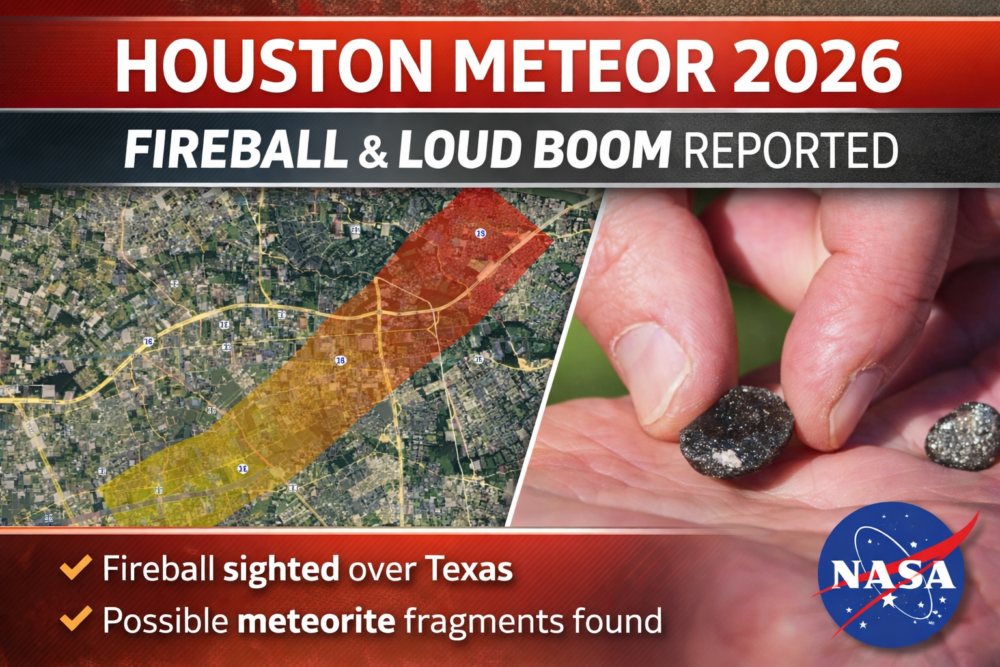
Houston Meteor 2026: Fireball and Loud Boom Reported Over Texas
A bright meteor streaked across the Houston sky on Saturday, March 21, 2026, surprising residents across Southeast Texas. Many people reported seeing a large fireball and hearing a loud boom, which experts later confirmed was caused by a meteor entering Earth’s atmosphere.
Scientists say the object was a small space rock that burned up while traveling at extremely high speed through the atmosphere.
What Happened in the Houston Meteor Event?
According to NASA, the meteor was spotted around 4:40 p.m. local time as it moved across the Texas sky. The object created a bright flash before breaking apart high above the ground.
Residents across several Houston suburbs reported:
- A bright fireball in the sky
- A loud boom or explosion-like sound
- Houses shaking slightly due to a pressure wave
Experts say this type of event is called a “fireball meteor,” which is brighter than a typical shooting star.
Also Read: Controversy Erupts as Trump Responds to Robert Mueller’s Death
Houston Meteor 2026 Key Details
| Detail | Information |
|---|---|
| Date | March 21, 2026 |
| Location | Houston area, Texas |
| Meteor Size | About 3 feet wide |
| Estimated Weight | Around 1 ton |
| Speed | Nearly 35,000 mph |
| Altitude of Breakup | About 29 miles above Earth |
NASA detected the meteor using satellite and atmospheric monitoring systems.
Possible Meteorite Debris
Scientists believe small fragments of the meteor may have reached the ground after the explosion. Radar data suggested debris could have fallen in areas north of Houston between Willowbrook and Northgate Crossing.
In one case, a resident reported that a rock-like object may have crashed through the roof of a home, though investigations are still ongoing.
Why the Meteor Made a Loud Boom
The loud sound heard by residents was likely a sonic boom caused when the meteor broke apart at high speed in the atmosphere.
When meteors travel faster than the speed of sound, they can create pressure waves that sound like explosions on the ground.