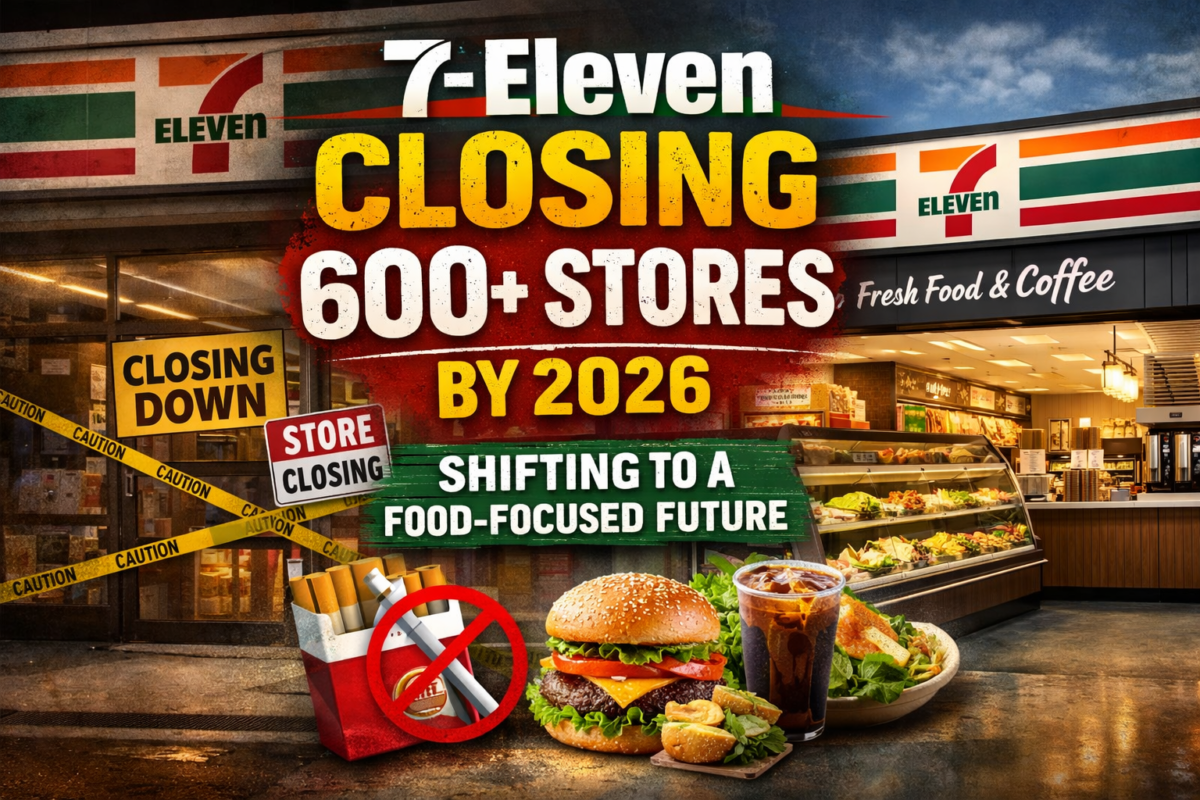
7-Eleven Closing Hundreds of Stores in 2026: What’s Happening?
7-Eleven is planning to close more than 600 stores across North America in 2026 as part of a major business transformation.
The move is not just about cutting costs — it’s a strategic shift toward a food-focused retail model designed to match changing customer preferences.
Why 7-Eleven Is Closing Hundreds of Stores
The company is shutting down underperforming locations while investing in bigger, modern stores.
Key reasons behind the closures:
- 📉 Declining foot traffic in traditional convenience stores
- 🚬 Falling cigarette sales (once a major revenue source)
- 💰 Rising operational costs and inflation pressures
- 🛒 Changing consumer habits toward fresh food and meals
Earlier, the company had already closed hundreds of stores in 2024 and 2025 as part of this ongoing strategy.
Shift Toward Food-Focused Stores
Instead of small convenience outlets, 7-Eleven is now focusing on larger, food-centric locations.
What’s changing?
- 🍔 Expanded fresh food and ready-to-eat meals
- ☕ Premium beverages and coffee options
- 🏪 Bigger store formats with improved layouts
- 🌍 Introduction of international-style menu items
These new “food-forward” stores are already performing better, with higher daily sales compared to traditional outlets.
Not Just Closures — Expansion Too
Despite the closures, 7-Eleven is not shrinking overall.
The company’s future plans:
- Open 200+ new stores in North America
- Launch modern, large-format outlets
- Expand globally with updated store concepts
- Convert some locations into wholesale fuel stores
This shows the company is reshaping — not retreating.
What This Means for Customers
For customers, this shift could bring a better in-store experience.
What shoppers can expect:
- ✔ More fresh and healthier food options
- ✔ Improved store environments
- ✔ Faster service and better product variety
However, some local areas may lose nearby stores due to closures.
Bigger Picture: A Retail Industry Trend
7-Eleven’s decision reflects a broader shift in the retail industry.
- Convenience stores are evolving into mini food hubs
- Customers prefer quality meals over quick snacks
- Competition from chains offering fresh food is increasing
This transformation is part of a long-term plan to stay competitive in a changing market.
The 7-Eleven store closures in 2026 are not just about downsizing — they signal a major shift in how convenience stores operate.
By focusing on food, experience, and modern retail formats, the company aims to stay relevant and grow in the future.