Trump’s TACO Trade Creates a Dangerous Catch-22 in Oil Prices
The global oil market is currently stuck in a risky situation — a classic Catch-22.
On one hand, supply disruptions are pushing prices sharply higher. On the other, financial markets are behaving as if the crisis will soon be resolved.
This contradiction could make the situation worse rather than better.
📈 What’s Happening in the Oil Market?
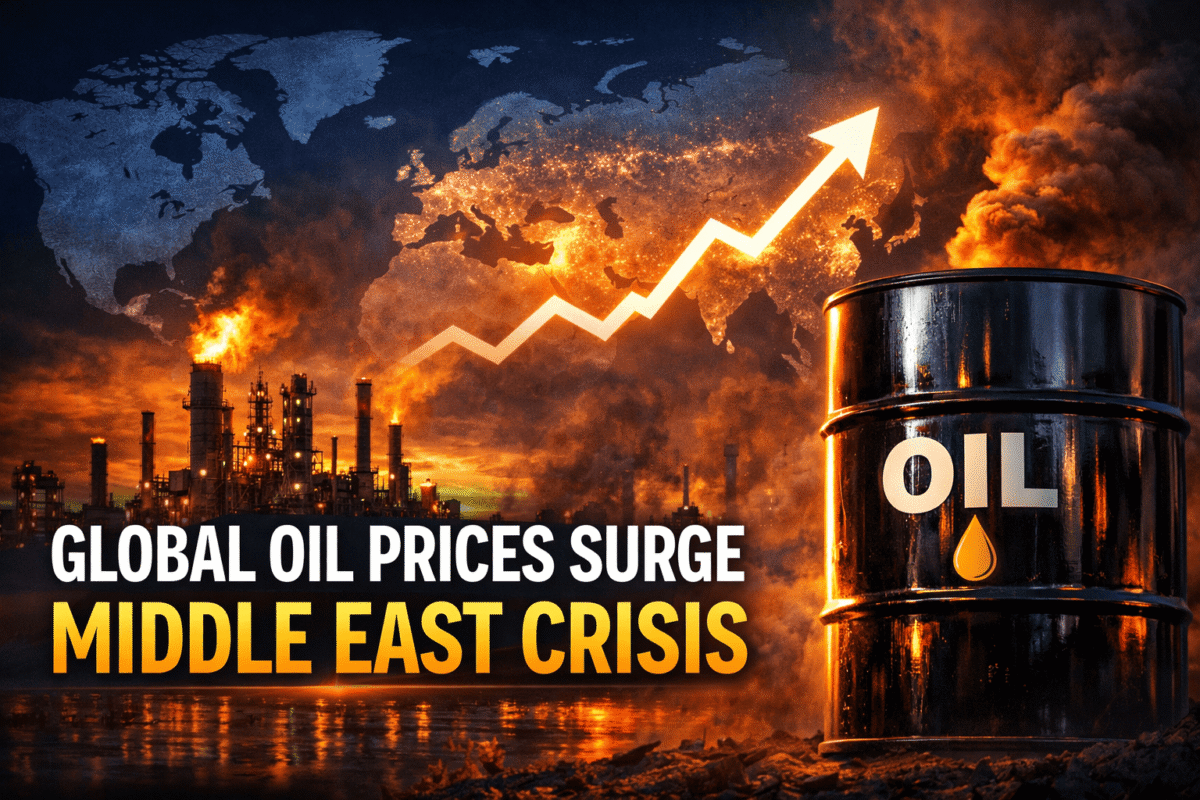
Crude oil prices have surged dramatically due to escalating tensions in the Middle East, especially around the Strait of Hormuz, a key route for global oil supply.
- Around 20% of the world’s oil flows through this route
- Supply disruptions are estimated at ~12 million barrels per day
- Brent crude prices have crossed $110 per barrel
At the same time, refined fuels like jet fuel in Asia are becoming extremely expensive — even higher than levels seen after the 2022 Ukraine war.
⚠️ The “TACO Trade” Explained
A major factor influencing market behavior is something known as the “TACO trade” — short for “Trump Always Chickens Out.”
👉 This idea suggests that markets expect political leaders to eventually back down from extreme actions, leading to a recovery.
So investors are betting that:
- The conflict will ease soon
- Oil supply will return to normal
- Prices will stabilize
🤔 Why This Is a Problem
Here’s where the Catch-22 comes in:
- Markets expect a quick resolution
- Because of that, pressure on policymakers is reduced
- As a result, the conflict may last longer
In simple terms:
| Market Behavior | Real-World Impact |
|---|---|
| Betting on peace | Delays actual resolution |
| Lower panic in pricing | Less urgency for action |
| Optimism | Prolonged crisis |
🌍 Global Impact: Who Gets Hit Hardest?
If the crisis continues, the consequences could be severe:
🔻 Most Affected Regions
- Asia and Africa (major fuel importers)
- Countries dependent on imported energy
🔺 Broader Effects
- Rising inflation worldwide
- Higher transportation and fuel costs
- Slower economic growth
Even wealthy nations won’t be immune, as energy-driven inflation spreads globally.
⛽ Why Supply Shock Is So Serious
The current oil disruption is unusually large:
- Bigger than past supply shocks
- Only partially offset by reserves and policy measures
- Could exceed demand losses seen during COVID-19
If the Strait of Hormuz remains blocked, the economic damage could escalate quickly.
📊 Key Takeaways
- Oil markets are underestimating the severity of the crisis
- The “TACO trade” may be giving false confidence
- Supply disruptions are massive and ongoing
- A prolonged conflict could trigger a global economic slowdown
The oil market is walking a tightrope.
While investors remain hopeful for a quick resolution, the reality on the ground suggests otherwise. This mismatch between expectations and reality is what makes the situation so dangerous.
If tensions persist, the world could face not just an energy crisis — but a broader economic shock.