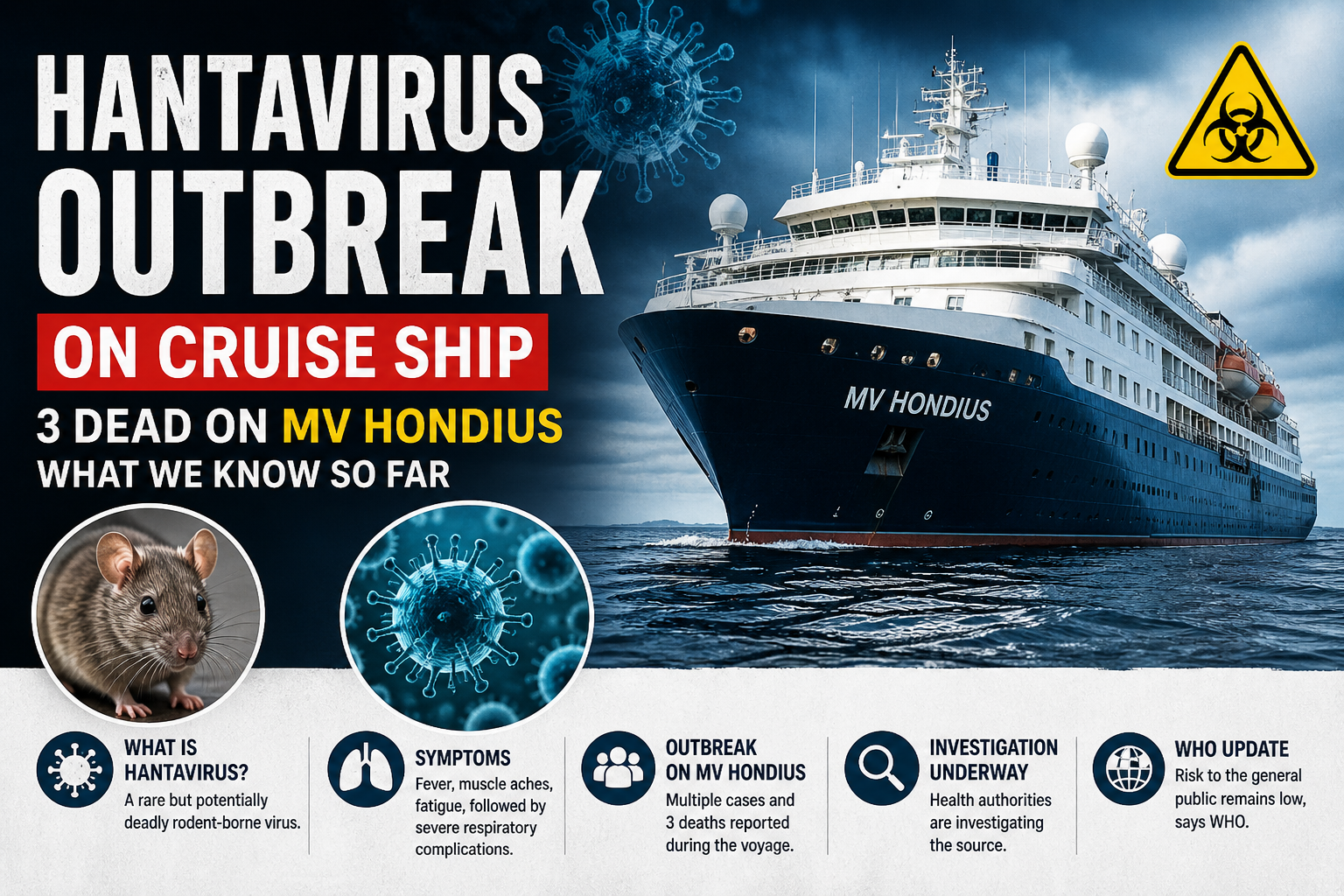
Deadly Hantavirus Outbreak on Cruise Ship: What Happened and Why It Matters
A luxury expedition cruise turned into a medical emergency after a suspected hantavirus outbreak aboard the MV Hondius led to multiple deaths and serious illness among passengers. Health authorities are now investigating how a virus typically linked to rodents spread in such an unusual setting.
What Happened on the Cruise Ship?
The outbreak occurred on the MV Hondius, a polar expedition vessel traveling from Argentina toward Cape Verde. During the journey, several passengers developed severe flu-like symptoms that quickly escalated into life-threatening respiratory complications.
At least three people have died, while others fell ill, including one passenger who tested positive for hantavirus and remains in intensive care in South Africa.
The World Health Organization (WHO) confirmed one case through laboratory testing and is closely monitoring several additional suspected cases.
What Is Hantavirus?
Hantavirus is a rare but potentially deadly virus usually transmitted to humans through contact with infected rodent urine, droppings, or saliva.
In severe cases, it can cause:
- Hantavirus Pulmonary Syndrome (HPS) – affects the lungs and can lead to respiratory failure
- Hemorrhagic Fever with Renal Syndrome (HFRS) – affects kidneys and blood vessels
Early symptoms often resemble the flu—fever, fatigue, and muscle aches—but can rapidly worsen into breathing difficulties, making early detection critical.
Why This Outbreak Is Unusual
Hantavirus outbreaks are typically linked to rural or forested environments where rodent exposure is common. A cruise ship setting raises important questions:
- Was there rodent contamination onboard?
- Did exposure happen during shore excursions?
- Could there have been limited human-to-human transmission (rare but possible in certain strains)?
Experts say investigations are ongoing, including environmental checks and virus sequencing to determine the exact source.
Response and Current Situation
Global health authorities, including the WHO, are working with governments and the cruise operator to:
- Provide urgent medical care to affected passengers
- Arrange medical evacuations
- Conduct a full epidemiological investigation
Despite the seriousness of the incident, officials have stated that the risk to the general public remains low, as hantavirus does not spread easily between people.
Key Takeaways
- A rare hantavirus outbreak on a cruise ship has resulted in multiple deaths and serious illness.
- The virus is typically spread through rodents, making this maritime outbreak highly unusual.
- Early symptoms can appear mild but may quickly become life-threatening.
- Health agencies are actively investigating the source while managing patient care.
This incident highlights how even rare infectious diseases can emerge in unexpected environments. It also underscores the importance of rapid medical response, global coordination, and strict hygiene measures—especially in confined spaces like cruise ships.
As investigations continue, this case may offer critical insights into how diseases spread beyond their usual boundaries, helping improve prevention strategies in the future.