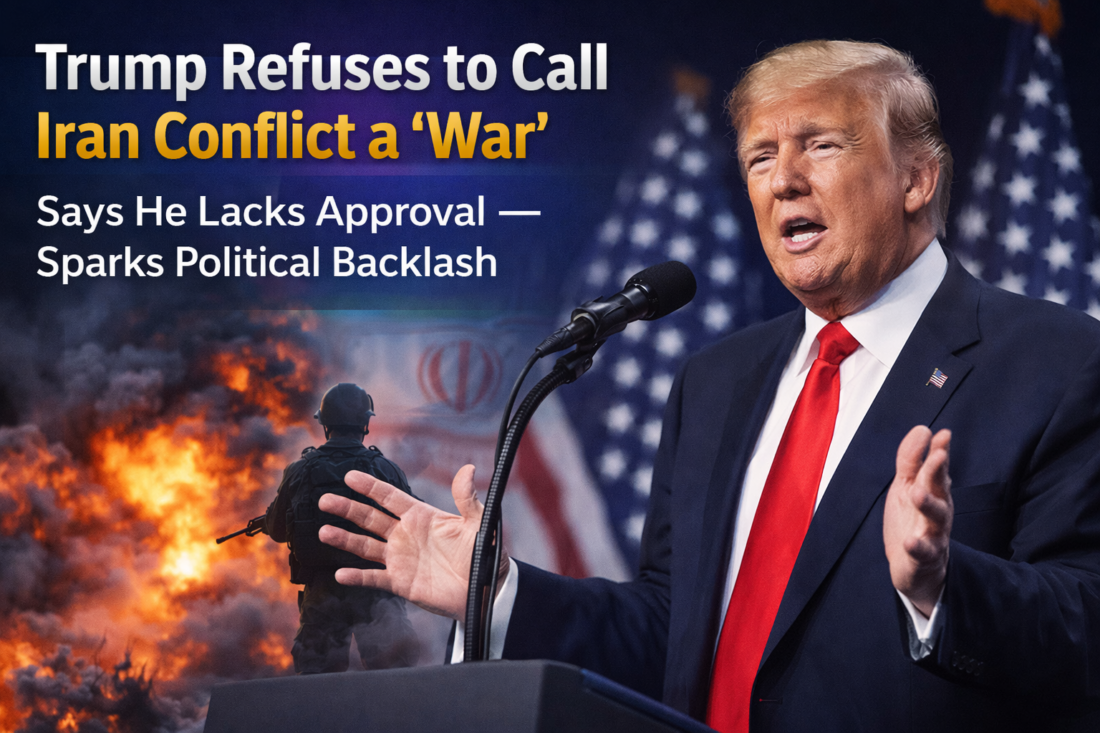
Trump Refuses to Call Iran Conflict a ‘War,’ Says He Lacks Approval — Sparks Political Outrage
Former U.S. President Donald Trump triggered major controversy after saying he avoids calling the ongoing Iran conflict a “war” because he does not have formal approval to use that term.
His comments quickly sparked criticism from political leaders and analysts, with some calling the explanation a “colossal failure” in leadership.
The debate highlights the growing political tension surrounding the U.S.–Iran military operations and the role of Congress in authorizing war.
What Trump Said About the Iran Conflict
During a fundraising dinner for Republican lawmakers in Washington, Trump explained why he avoids the word “war.”
- He said using the term “war” requires official approval.
- Instead, he prefers to call the situation a “military operation.”
- Trump described the operation as a “military decimation.”
The statement comes amid ongoing U.S. and Israeli strikes against Iranian targets, which began earlier this year.
Why the Comment Caused Outrage
Critics say Trump’s explanation raises questions about the legal authority for U.S. military actions.
Key criticisms
- Lawmakers argue the situation already resembles a full-scale war.
- Some critics say avoiding the word does not change the reality of the conflict.
- Political opponents described the explanation as a leadership failure.
Supporters, however, argue that presidents often use terms like “military operations” or “interventions” instead of war.
U.S. Law on Declaring War
Under the U.S. Constitution, only Congress has the authority to officially declare war.
| Authority | Role |
|---|---|
| U.S. Congress | Can formally declare war |
| U.S. President | Commander-in-Chief of the military |
| War Powers Act | Limits military actions without congressional approval |
In recent decades, presidents have frequently launched military operations without a formal war declaration.
Background: The 2026 Iran Conflict
The current conflict escalated after U.S. and Israeli strikes targeted Iranian military infrastructure earlier this year.
Key developments
- Military strikes against Iranian targets
- Rising tensions across the Middle East
- Disruption to global energy routes
- Diplomatic attempts to reduce escalation
The conflict has also raised concerns about regional instability and global economic impacts.
Political Reactions in the U.S.
Reactions from U.S. politicians have been sharply divided.
Supporters say
- Military action was necessary for national security
- The operation protects U.S. allies and global stability
Critics argue
- Congress should have approved military action first
- The administration is avoiding accountability by not calling it war
Key Takeaways
- Donald Trump said he won’t call the Iran conflict a “war.”
- He claims using the term would require formal congressional approval.
- Critics say the explanation shows political and legal contradictions.
- The debate highlights ongoing concerns about U.S. war powers and military authority.
The controversy surrounding Trump’s comments reflects the larger debate over U.S. military involvement in Iran.
Whether labeled a war or a military operation, the situation continues to raise serious political and legal questions about how America enters armed conflicts and who has the authority to approve them.